Feature-First Architecture
Architecture Overview
The MS-dTMT project implements a Feature-First Architecture that incorporates Clean Architecture principles. In this approach, code is primarily organized by features rather than technical layers, promoting cohesion and modularity. Within each feature, we follow a layered structure based on Clean Architecture concepts.
The application uses GetX as the primary framework for state management, dependency injection, and navigation, which integrates seamlessly with this architectural approach.
Main Organization
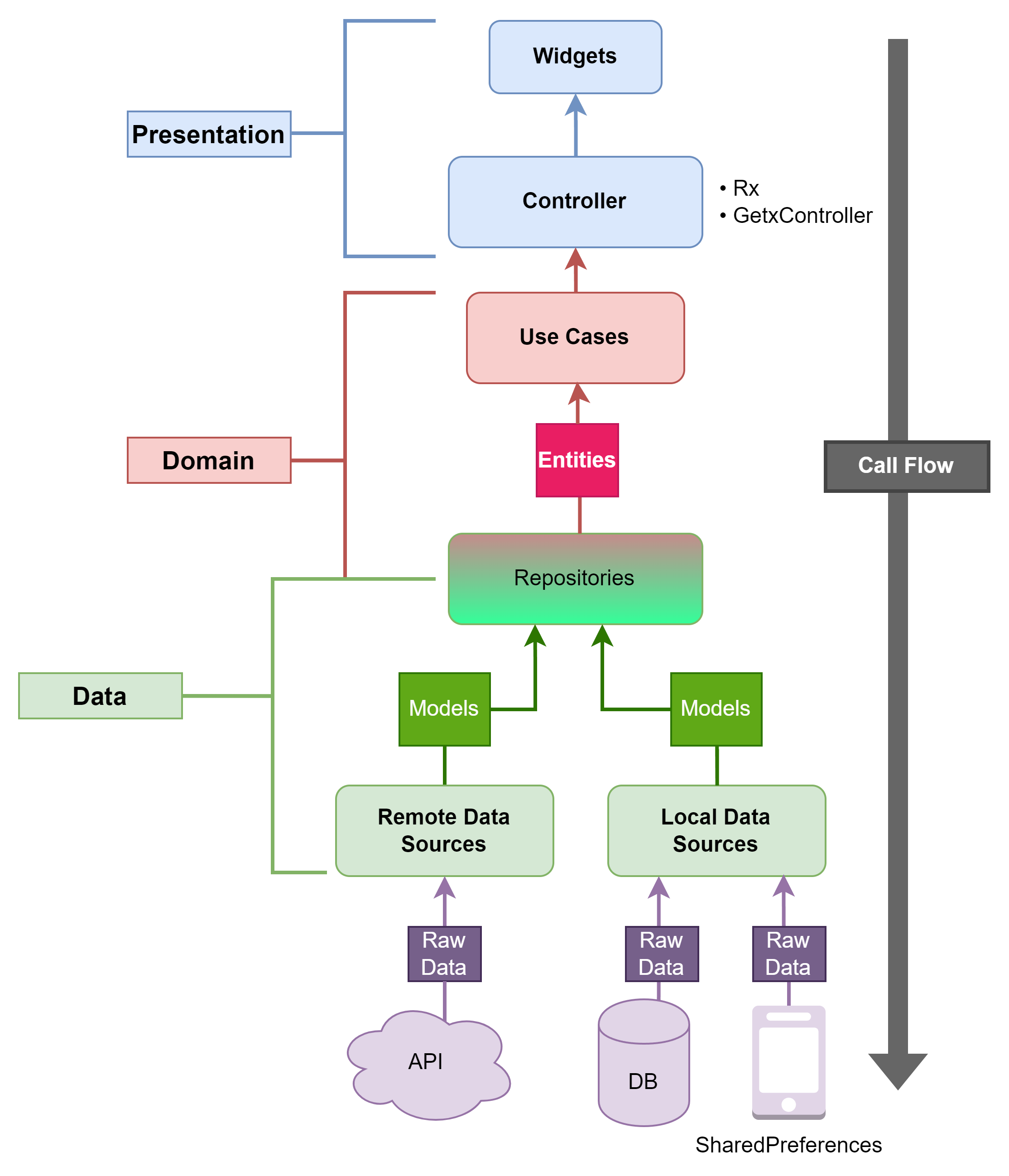
Feature-First Structure
The codebase is organized by features, where each feature contains its own:
Presentation layer (UI components)
Domain layer (business logic)
Data layer (data access)
This organization makes the codebase more navigable, as related code is grouped together regardless of its technical role.
Clean Architecture Layers
Within each feature, we follow Clean Architecture principles with distinct layers:
Presentation Layer
Views: Flutter Widgets that render the user interface
Controllers: GetX controllers that handle user input and manage UI state using reactive programming
Bindings: GetX bindings that manage dependency injection for controllers and services
Domain Layer
Entities: Domain objects representing core business concepts and data structures
Use Cases: Application-specific business rules encapsulating all business logic
Repository Interfaces: Abstract definitions declaring data access methods without implementation details
Data Layer
Repository Implementations: Concrete implementations of the repository interfaces defined in the domain layer
- Data Sources: Components that interact with external data providers:
Local data sources (SQLite, SharedPreferences)
Remote data sources (REST API)
Models: Data transfer objects (DTOs) that handle serialization and deserialization
Dependency Rules
The architecture follows strict dependency rules to maintain separation and testability:
Presentation layer depends on the domain layer
Domain layer does not depend on any outer layers
Data layer depends on the domain layer (to implement its interfaces)
These dependencies always point inward, ensuring that inner layers remain independent of external frameworks and implementation details.
GetX Integration
GetX is integrated throughout the application:
State Management: Controllers use Rx variables and streams for reactive state updates
Dependency Injection: Services and controllers are registered and accessed through GetX service locator
Route Management: Navigation between screens is handled with GetX named routes
Bindings: Components are initialized and injected when routes are accessed
Folder Structure
The project follows a feature-first organization:
lib/: Application source code
app/: Main code of the application
features/: Code organized by feature modules
tm_tst/: Trail Making Test feature * presentation/: UI components, screens, controllers * domain/: Entities, use cases, repository interfaces * data/: Models, repository implementations, data sources
user/: User management feature * (same structure as above)
home/: Home screen and navigation feature * (same structure as above)
config/: Application configuration * routes/: Route definitions * themes/: Theme configuration * translation/: Localization resources
utils/: Utility functions and helpers * services/: Common services (network, storage) * helpers/: Helper functions and extensions * mixins/: Shared functionality via mixins
shared_components/: Reusable UI components
constans/: Constant definitions
main.dart: Application entry point
Benefits of Feature-First Architecture
This architectural approach offers several advantages:
Cohesion: Related code stays together regardless of its layer
Discoverability: Easier to navigate and find relevant code
Scalability: New features can be added without modifying existing ones
Maintainability: Changes to one feature don’t affect others
Teamwork: Different teams can work on different features simultaneously
Testability: Features can be tested in isolation